28 Decorative Mandala Art Collection: Designs for Every Project
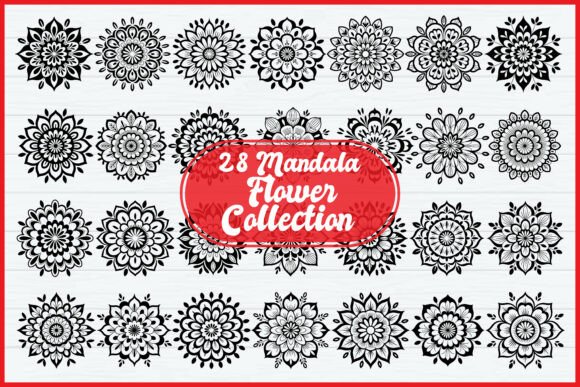
There is a distinct kind of energy that comes from a well-crafted mandala. It’s more than just a geometric pattern; it’s a visual rhythm that can instantly bring a sense of balance and focus to a design. For creators, finding high-quality, versatile mandala assets can be a game-changer, saving hours of tedious drawing time. This is where a dedicated resource like the 28 Decorative Mandala Art Collection becomes an essential part of your toolkit. It’s not just a random assortment of shapes—it’s a curated set of intricate designs meant to solve specific creative challenges, whether you're working on a client's brand identity or personalizing a gift.
The Anatomy of a Versatile Design Asset
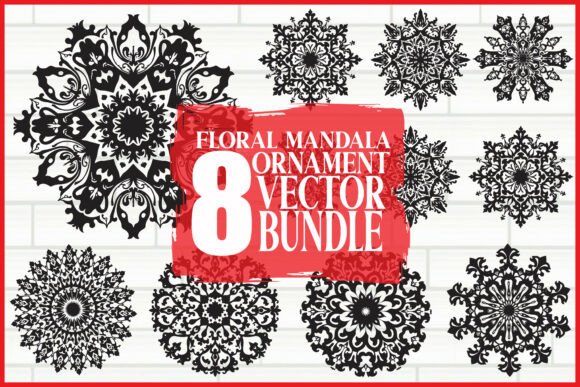
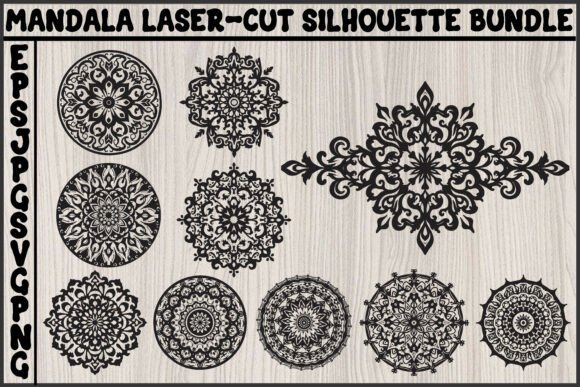
When you first look at the 28 Decorative Mandala Art Collection, the immediate impression is one of precision and detail. Each of the 28 designs is built on a foundation of symmetry, featuring clean lines that radiate outward from a central point. This isn't the kind of loose, hand-sketched art that might look charming but falls apart when scaled. Instead, these are professional-grade vectors. You can enlarge them for a large-format wall art print or shrink them down for a delicate sticker, and the integrity of the design remains intact. The visual personality is one of sophisticated calm—detailed enough to be interesting, but structured enough to avoid feeling chaotic. This makes the collection incredibly adaptable for modern typography and layout work, acting as a powerful visual anchor.
The true value of this collection lies in its practical application across different media. As a designer, I often need assets that can jump between digital and physical realms without requiring a complete redesign. The included file formats—SVG, AI, EPS, JPG, PNG, and PDF—are specifically chosen to facilitate this workflow. For those using cutting machines like a Cricut or Silhouette, the SVG files are crucial. They allow the machine to read the vector paths precisely, ensuring clean cuts on vinyl, paper, or cardstock. If you are focused on digital design for websites or social media graphics, the high-resolution PNG files with transparent backgrounds are ready to drop into your layout immediately. This versatility transforms the collection from a simple graphic pack into a robust set of design assets.
Integrating Mandalas into Brand and Editorial Design
Using decorative elements effectively requires a bit of strategy. A mandala is a strong visual statement, and if used carelessly, it can overwhelm a layout. However, when applied with intent, it can elevate a project significantly. Consider packaging design: a mandala pattern from this collection could be used as a background texture on a box, or as a focal point on a label for a wellness or beauty product. The symmetry of the mandala naturally draws the eye, making it an excellent tool for creating a visual hierarchy. It suggests that the brand is balanced, thoughtful, and detail-oriented—qualities that resonate deeply with consumers.
In editorial design and publishing, these designs work beautifully as chapter headers, page borders, or even subtle watermarks behind body text to add texture. For bloggers and content creators, a mandala can serve as a unique framing device for quotes or testimonials on Instagram. Because the 28 Decorative Mandala Art Collection offers so many variations, you can maintain visual consistency across a long-term project—like a book series or a multi-page website—without the design feeling repetitive. You might use one intricate mandala for the main hero image and a simpler, derived pattern for the footer, creating a cohesive brand identity that feels polished and professional.
It is also worth noting the cultural and emotional weight these designs carry. Mandalas are historically associated with the universe, wholeness, and harmony. Incorporating them into logo design or web design for yoga studios, meditation apps, or holistic health practitioners feels intuitive and authentic. However, their application isn't limited to spiritual niches. In a more corporate context, a mandala can be stylized and color-changed to represent connectivity, innovation, or community, depending on the color palette and surrounding typography you choose.
Practical Tips for Selecting and Pairing
Choosing the right mandala from the set depends on the scale of your project and the medium you are using. If you are creating laser-cut wood art or detailed paper cuts, look for designs that have thicker negative spaces between the lines. Extremely intricate, thin-line mandalas might get lost or break during the cutting process. Conversely, if you are printing on fabric or using the design for social media graphics, you can afford to use the more complex, high-detail options because there is no physical stress on the material.
One of the most common questions I get about decorative assets is regarding font pairing. Because mandalas are visually dense, they generally pair best with clean, simple typography. A sans serif font with a modern, geometric structure often complements the symmetry of the mandala without competing for attention. Alternatively, if you want a more elegant or bohemian feel, a flowing script font can work, provided it is legible against the intricate background. I recommend placing your text in a solid block or circle in the center of the mandala, or using a "knockout" effect where the mandala surrounds the text. Always test your pairing at the intended size; what looks good on a monitor might become muddy on a printed business card.
Finally, always pay attention to the licensing. The 28 Decorative Mandala Art Collection is noted as being perfect for both personal and commercial use. This is a significant advantage for entrepreneurs and small business owners. It means you can use these designs on products you sell—like t-shirts, mugs, or digital downloads on Etsy—without worrying about copyright infringement. It removes the legal friction from the creative process, allowing you to focus purely on the aesthetics and functionality of your work. By treating these mandalas not just as "pretty pictures" but as functional design assets, you unlock a new level of creativity and professionalism in your projects.